
Circularity in Practice: Symposium on Circular Strategies for Design and Construction
CIRCULARITY IN PRACTICE: Case Studies and Strategies for Design and Construction
The built environment consumes nearly half of all global raw materials, generates a third of its waste, and over 40% of its embodied carbon emissions. Circularity is a regenerative design approach that addresses these critical impacts.
Circular Design considers the entire lifecycle of buildings and materials, embracing strategies of reuse, adaptation and renewal, giving architects, contractors, manufacturers and building owners the essential tools they need to make better buildings while addressing climate change, material waste, and biodiversity loss. Circularity also empowers teams to improve resilience in the built environment, support equity, and fuel local economic development.
Join AIASF COTE for this afternoon symposium on Circularity in Practice. Gain actionable insights into how circular design will transform your practice or business, and help to drive the transition toward a regenerative, reduced waste, low-carbon world! The event includes three panel sessions, a materials roundtable, a vendor showcase, and concludes with a networking happy hour. 4 AIA CE LU|HSW approved.
In Person tickets are sold out. Zoom option available HERE
Hosted by AIASF Knowledge Community - Committee on the Environment (COTE)
Planning Committee: Charlie Stott, AIA, LEED AP | Stott Architects + AIASF COTE Co-Chair, David Lehrer, NCARB | Center for the Built Environment, Kathryn Soter | Good Future Design Alliance, Teresa Jan, AIA | Perkins & Will + AIASF COTE member
CIRCULARITY IN PRACTICE | Case Studies and Strategies for Circular Design and Construction
Wednesday, APRIL 22 | Earth Day! Noon-7pm. (Program starts at 1:00pm)
12:30pm – 1:00pm Check in and Registration (lunch NOT provided)
1:00 – 1:15 pm Program Welcome:
-
Charlie Stott | Stott Architects + COTE Co-Chair
-
David Lehrer | Center for the Built Environment
1:15 – 1:35 pm Keynote Address: Redefining Design around the Circular Economy
-
Kjell Anderson | LMN Architects
1:40 – 2:30 pm Panel Presentation 1:
Closing the Loop at Home: Circular Strategies in Residential Design.
How do circularity principles translate to the scale of a single-family home? This case study panel brings together a residential architect and a builder to share firsthand lessons from projects that embrace reuse, adaptive design, and low-impact construction. Hear candid insights about client conversations, cost considerations, and how practical circular strategies improve durability, health, and long-term performance in residential design.
-
Architect: Lincoln Lighthill | Lincoln Lighthill Architecture
-
Contractor: Everson Perez | Perez Construction
-
Moderator: Kathryn Soter | Good Future Design Alliance
2:35 – 3:25 pm Panel Presentation 2:
Regenerating the Public Realm: The Contra Costa County Administration Building
How do circularity principles translate to larger scale projects? This case study panel highlights the first public building to achieve TRUE Gold for Construction using exceptional levels of waste reduction and reuse strategies. Join the architect | owner | contractor team as they reveal the evolution of this unique design-build project: Explore the project’s circular strategies and lessons learned from a highly collaborative process. And learn about the wins and challenges of managed demolition, building with reused materials, and the materials supply chain.
-
Architect: Dalton Ho | Perkins & Will
-
Owner Representative: Cymbre Potter | Vanir
-
Contractor: Kavita Karmarkar | Webcor
-
Moderator: Peter Pfau | Perkins & Will
3:25 – 3:40: BREAK
3:40 – 4:15 Materials Roundtable:
Circular Materials: Lessons From Aluminum, Wood, and Emerging Materials
This panel kicks off PechaKucha style, with three manufacturers presenting on the state of circularity in the world of building materials. Then a rapid-fire round table conversation about: What it means when we use the terms recycled, re-used, reclaimed and regenerative, and some thoughts on: Why scale matters, local vs global, end-of-life material concerns, and the interplay between circular materials, waste reduction and embodied carbon. To wrap: Some helpful tips when researching, verifying and specifying low-impact circular products.
-
Aluminum products + recycling: Hilde Kallevig | Hydro
-
Salvaged + repurposed wood: Gwen Sloane | Cambium
-
Strawbale structural panel system: Anthony Dente | Verdant Panel
-
Moderator: Isabella van der Griend | Brightworks
4:20 – 5:20 pm Panel Presentation 3:
Circular Networks: Perspectives from the Field
This conversation goes beyond design, unpacking how public policy, private businesses and building contractors engage with circularity: Understand how local policies drive construction material recycling and reuse, support the reclaimed products market, and work to make circular low-waste practices the norm. Learn about business and building owners who embrace a circular approach, and the implementation tools they use for new construction and remodeling success. And discover why building contractors are the emerging critical link in the circular design network—connecting circular design intent with real world execution.
-
Client: Mark Klein| Genentech
-
Contractor: Brett Stuckey | Turner Construction
-
Policy & Programs: James Slattery | City of San Francisco Dept of the Environment
-
Moderator: Marcus Hopper | Gensler
5:25 – 5:45 pm Circular Design Wrap
-
Kathleen Hetrick | Buro Happold
5:45– 5:55 pm Thank you’s:
-
Charlie Stott | Stott Architects + COTE Co-Chair
-
Teresa Jan | Perkins & Will + COTE Symposium Planning Member
5:55 – 7:00 pm: Happy Hour + Networking
Program Welcome:
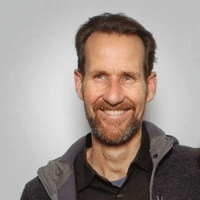
Charlie Stott AIA
Stott Architects | Principal
AIASF COTE Co-Chair
Charlie designs environments that respect nature, enhance place, and reveal the craft of construction, incorporating climate-positive, resilient solutions that do more with less. His design expertise includes single and multi-family residential homes; K-12 and university academic buildings; and community and institutional projects. Charlie has longstanding involvement with the San Francisco AIA's Committee on the Environment, currently acting as co-chair of COTE. He is a registered architect, a LEED accredited professional, and holds a bachelor’s and a master’s degree in architecture.
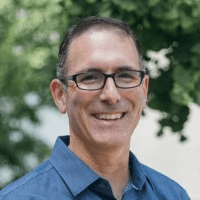
Center for the Built Environment, UCB
Director of Communications and
Research Collaborations
AIASF COTE Symposium Committee
David is interested in the nexus between human experience and sustainability. His background includes architecture and communications design, and he has occupied many roles in his work, including that of researcher, designer, manager, and educator. At the Center for the Built Environment (CBE) at UC Berkeley, David leads communications, facilitating industry/university collaborations, acting as the primary liaison between CBE’s research team and their industry partners, and providing strategy direction and oversight for their research portfolio.
____________
Keynote:
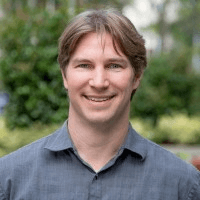
Kjell Anderson FAIA
LMN | Director of Sustainable Design
Kjell Anderson, FAIA, practices architecture and serves as a Principal and the Director of Sustainable Design at LMN Architects, working with LMN’s clients to set and exceed sustainable design goals. He wrote the first architect-centered book on energy modeling, led the development of the Path To Zero Carbon series and has spoken extensively on energy, water, materials, and embodied carbon. He lives in Seattle with his wife and daughters and enjoys playing music and basketball.
Panel Presentation 1:
Closing the Loop at Home: Circular Strategies in Residential Design
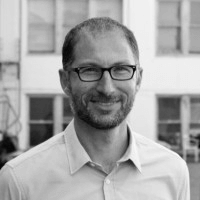
Lincoln Lighthill Architect | Principal
Lincoln is a licensed architect in the state of California, a LEED accredited professional, and a certified lighting designer with 20 years of experience in design and construction. His practice is focused on modern, high performance design across a range of project types, with custom residential, educational, office and hospitality projects currently underway.
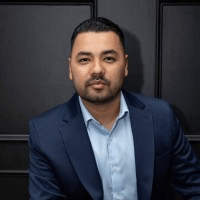
Perez Construction | CEO + Owner
Everson founded Perez Construction with a mission to develop Latino leaders who serve their families, communities, and companies; and a commitment to San Francisco's premier high-end residential remodeling market. Perez Construction has earned recognition in the AD PRO Directory, been named a Fast 100 company, and has showcased their work at the prestigious SF Decorator Showcase. Everson’s journey, as a father of three, extends beyond building construction. It's also about building a legacy for the families of those on his team, and making a commitment to creating sustainable opportunities that will benefit generations to come.

Good Future Design Alliance | Executive Director
AIASF COTE Symposium Committee
Kathryn has spent her career making complicated things make sense to people who need to act on them. As founder and Executive Director of the Good Future Design Alliance, she advises manufacturers, design firms, and organizations on sustainable materials, circular practice, and waste reduction — translating complex research into clear, actionable guidance for architects and interior designers working in residential and boutique hospitality design.
Panel Presentation 2:
Regenerating the Public Realm: The Contra Costa County Administration Building
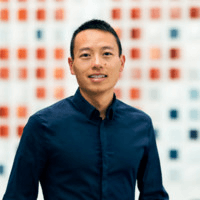
Dalton Ho AIA
Perkins & Will | Senior Generative
Design Advisor, Senior Associate
Dalton brings more than 10 years of experience managing projects pursuing advanced resilient, regenerative, and decarbonized design strategies. He leads the firm’s high-performance design team, implementing early stage building assessment to accelerate performance. He also co-leads Perkins&Will’s embodied carbon working group, sharing firmwide expertise in whole-life carbon reduction within the built environment. He is subject matter expert on a breadth of issues ranging from decarbonization and climate change initiatives, to material health and occupant wellness. Dalton excels at leading complex stakeholder teams and identifies holistic, practical, and actionable goals and targets across a variety of work including master plan sustainable design policy guidelines, district-scale energy, water and waste studies, and several net-zero energy and water projects.

Cymbre Potter AIA
Vanir | Project Director
Cymbre Potter is a Project Director at Vanir and a licensed architect with more than 25 years of experience in architecture, construction management, and owner’s representation. She has built her career around public‑sector, healthcare, and K–12 projects, and is known for guiding complex capital programs with clarity, collaboration, and a strong commitment to community‑serving design. In her current role, she oversees all capital projects Vanir is delivering for Contra Costa County—including civic, healthcare, and behavioral health facilities.

Webcor | Sustainability Manager
As the sustainability manager at Webcor, Kavita helps project teams manage and complete all contractor responsibilities for project green building certification and other sustainability goals. She also manages Webcor’s carbon tracking and management program and internal waste management program; and is an SME on all things LEED and circularity. She has over 10 years of experience in the architecture and construction industry, working on a variety of projects and certifications. She has previously served on the LEED Materials and Resources Technical Advisory Group (MR TAG) at USGBC and is currently the co-chair of the Regional Leadership Advisory Board for USGBC California - Bay Area chapter.
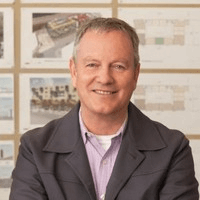
Peter Pfau FAIA
Perkins & Will | Design Director
Peter approaches architecture through the prism of human experience, regenerative architecture, and an obsession for building craft. His over 44 years of building experience has always been driven by his passion for thoughtful architecture that makes the world better ‘one building at a time’. Peter has been a principal at two award winning firms - He was a founding principal of Holt Hinshaw Pfau Jones in 1985, which rose to international fame with the design of the Astronauts Memorial at Kennedy Space Center, designated as the 25th National Memorial. Peter then founded Pfau Architecture in 1991, an atelier sized firm in San Francisco. In 2019, Pfau Long Architecture merged with Perkins&Will and Peter was appointed Design Director at Perkins&Will.
Materials Roundtable:
Circular Materials: Lessons from Aluminum, Wood, and Emerging Materials
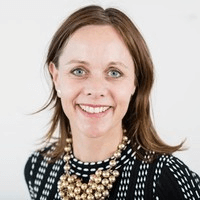
Hydro | VP Commercial Partnerships
Hilde has a decade of experience in the aluminum industry, where she has worked extensively with architects and designers to explore the creative and sustainable potential of aluminum. As former Head of Global Brand at Hydro, she led strategic brand initiatives across 40 markets, including the launch of Hydro’s “Greener Brands.” Hilde has spearheaded collaborative projects with renowned designers such as Tom Dixon and Norwegian creatives, notably through Hydro’s design-driven exhibition at Salone del Mobile in Milan. Now based in San Francisco, she continues to bridge industrial innovation with design thinking, helping shape new markets for more sustainable materials, where she believes that architects and designers are key in accelerating greener production and design.
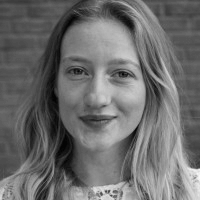
Cambium | West Coast Millwork Manager
Gwen is the West Coast Millwork Manager for Cambium, where she partners with architects and builders to integrate high-performance, sustainable wood specs into the built environment. With a background as the co-founder of a regenerative landscaping firm, Gwen specializes in replacing traditional methodologies with diverse ecological solutions. A dedicated systems thinker, she holds certifications in both Permaculture Design and Social Permaculture. Gwen bridges the gap between raw resource management and architectural beauty, advocating for a circular economy that begins with mindful material sourcing.
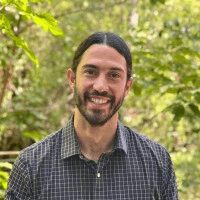
Anthony Dente PE
Verdant Panel | CEO
Anthony Dente, PE, is a licensed engineer and CEO of Verdant Structural Engineers and Verdant Building Products. VBP is deploying their carbon-storing, straw insulated, 2x6 structural wall panels, developed under an EPA SBIR grant. VSE assists with permit acquisition and product, research, and code development for low carbon structural solutions. He was the lead engineer for the Cob (Monolithic Adobe) Construction Appendix in the IRC, and the Hemp-Lime (Hempcrete) Appendix, both the first of their kind in the US. Anthony’s chair of the structural sub-committee of the TMS adobe code development and authored Essential Cob Construction with New Society Publishers.
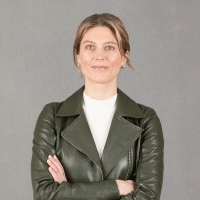
Brightworks Sustainability | Materials Specialist & PM
Isabella van der Griend is a Materials Specialist at Brightworks Sustainability in San Francisco, specializing in embodied carbon and Whole Building Life Cycle Assessment (WBLCA). With a background in architecture, she works with design teams to reduce the environmental impact of materials from early design through construction. She brings particular expertise in bamboo construction from her time living and working in Indonesia, and is drawn to its potential as a carbon-storing material that embodies the principles of circular, regenerative design.
Panel Presentation 3:
Circular Networks: Perspectives from the Field
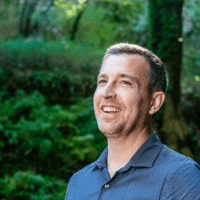
Mark Klein WELL Faculty,
Fitwel Ambassador
Genentech | Sr. Sustainability
Manager-Healthy Workplaces
Mark Klein manages Genentech’s Healthy & Sustainable Workplaces Program, focusing on sustainability within the built environment. He plays a key role in guiding the evolution of Genentech’s 200+ acre South San Francisco campus as it embarks on a major redevelopment journey. Mark is helping lead efforts to transition from traditional demolition practices toward deconstruction, prioritizing the recovery of valuable building materials. His work centers on “mining” existing structures for reuse, supporting circular economy principles and reducing waste. Through these initiatives, he advances strategies that integrate environmental responsibility into campus development while benefiting both the organization and the broader community.
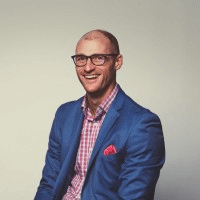
Turner Construction | Regional Sustainability Manager
Brett joined Turner Construction in 2009, and has held roles in nearly every department, including Engineering and Project Management, Preconstruction, Superintending, Finance, and Business Development. The projects he’s touched have spanned several market segments, including aviation, commercial, higher education, sports, R&D/Lab, and light industrial. Since June 2024, Brett has served as the Sustainability Manager for the Northern California Region, working collaboratively with project teams to reduce carbon, water, and waste impacts in Turner’s operations and the structures we build.
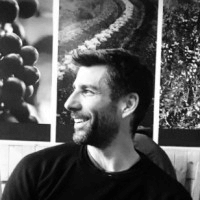
SF Environment Department |
Senior Program Coordinator
C&D Zero Waste Program
James Slattery is the Sr. Coordinator of San Francisco’s Construction and Demolition (C&D) Zero Waste program. His work focuses on resource conservation, waste reduction & material recovery strategies, and environmental action in solid waste management. James has worked with the San Francisco’s Environment Department for 14 years. He is excited to share San Francisco’s journey to reform activities throughout a building’s lifecycle to improve outcomes in green building, zero waste, toxics reduction, environmental justice, and climate action.
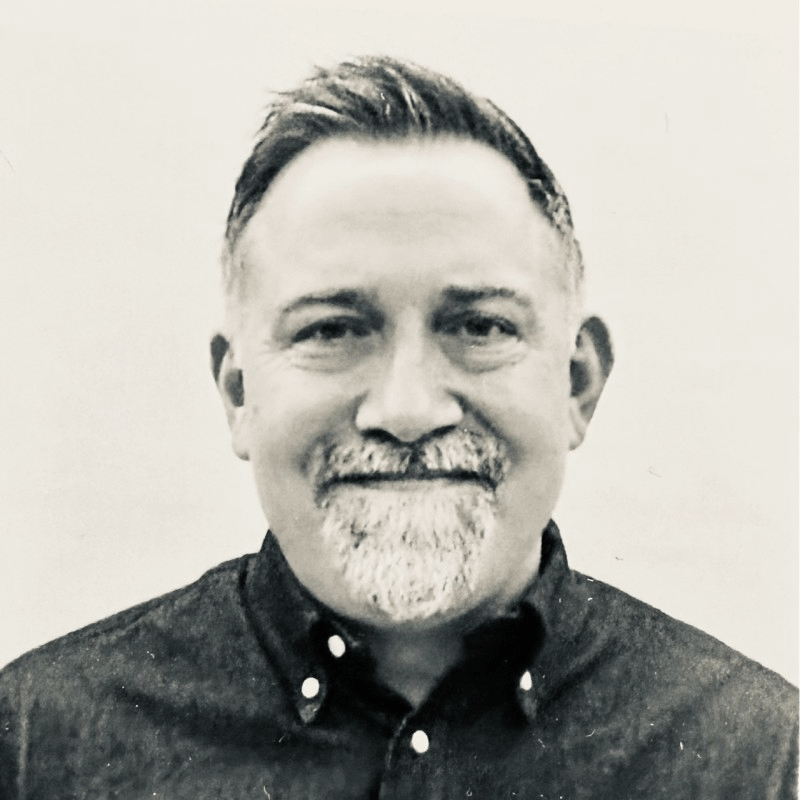
Marcus Hopper AIA
Gensler | Project Director, Senior Associate
Marcus Hopper is the primary leader for circularity and the circular economy at Gensler's San Francisco office. As the Design Management Leader for the Northwest region, Hopper focuses on integrating material sustainability and environmental conscientiousness into the built environment. He is a prominent advocate for the circular economy, often speaking on the benefits of material reuse to reduce waste and embodied carbon. He frequently represents the firm in circularity initiatives, including the local collaboration with the City of San Francisco Department of the Environment on studying material reuse marketplace sites to foster inclusive circular economies.
Circular Design Wrap:
Buro Happold |
Associate Principal
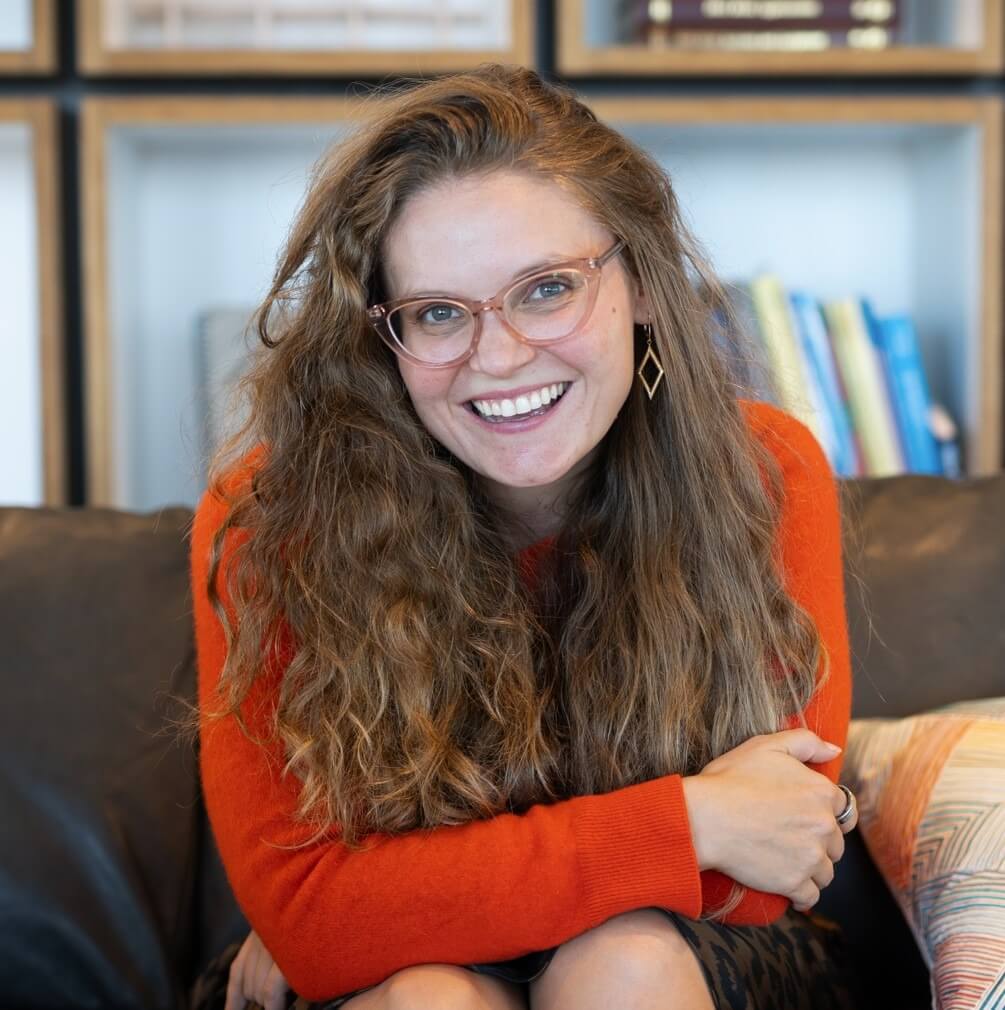
Kathleen Hetrick is an Associate Principal at Buro Happold and a Bloomberg Fellow at the Bloomberg School of Public Health at Johns Hopkins University. As the California Sustainability Lead for Buro Happold, Kathleen combines her passion for regenerative design with a technical background in Architectural Engineering. She leads the sustainable design process on a wide range of cutting-edge projects including LEED Platinum, ILFI Zero Carbon and Living Building Challenge buildings, portfolio-wide scope 3 emissions reduction plans, social impact studies, resiliency analysis and corporate sustainability implementation workshops. Her most recent work includes leading the circularity strategy for the Sparc Kips Bay Circular Design Pilot project in NYC, developing San Diego County’s From Waste to Worth Circular Economy Assessment and conducting circularity audits for museums, luxury retail, and mixed used adaptive reuse housing projects across Southern California. She is currently the co-chair for the USGBC-CA Circularity Committee and is one of the founding instigators of Carbon Leadership Forum – Los Angeles.
Thank You’s:
Charlie Stott AIA
Stott Architects | Principal
AIASF COTE Co-Chair
Charlie designs environments that respect nature, enhance place, and reveal the craft of construction, incorporating climate-positive, resilient solutions that do more with less. His design expertise includes single and multi-family residential homes; K-12 and university academic buildings; community and institutional projects. Charlie has longstanding involvement with the San Francisco AIA's Committee on the Environment, currently acting as co-chair of COTE. He is a registered architect, a LEED accredited professional, and holds a bachelor’s and a master’s degree in architecture.
Teresa Jan AIA
Perkins & Will | Director of Regenerative
Design, Senior Associate
AIASF COTE Symposium Committee
With over 20 years of professional experience in diverse design and planning typologies across the nation and internationally, Teresa champions the intersection of climate-positive design and resilient communities. An urbanist at heart, Teresa is passionate about fostering a symbiotic relationship between thriving cities and natural ecosystems. She believes in walking the walk, having recently completed a multi-year home electrification using federal and state incentives, gaining firsthand insight into decarbonizing daily life as she advocates for transitioning design and lifestyle away from fossil fuels. She has contributed to key industry resources like the “Building Decarbonization Practice Guide” and frequently speaks about equitable design, building decarbonization, health and wellness, and circularity at conferences.
4 AIA CE LU|HSW - Approved
Circularity in Practice brings together leading architects, contractors, building owners, policymakers, and manufacturers to share how to move circularity from aspiration to reality in the built environment. Through a series of expert-led panel conversations and case studies, explore how to:
-
Design for the Next Life: Understand how thoughtful dynamic planning and design can transform buildings from static objects to a living system of regenerative and modular materials that can be reused, repurposed, recycled and reassembled many times over.
-
Embrace the Long-Life Low-Carbon Future: Learn design strategies for long building lifespans and incorporating circular material resources at various scales – from homes to campus buildings – helping to reduce environmental strain, waste and costs.
-
Specify Circular Materials, and Help Grow the Market: Learn about tools and methods to research and specify circular, low-carbon, regenerative materials, and how search platforms and material databanks are scaling to meet climate targets, designer needs and market growth.
-
Understand Circular Infrastructure and Policies: Discover the latest regional material reuse programs, networks and government policies that are growing the circular economy. Learn about building resource facilities and tracking platforms, and various guidelines and certifications that address circularity, building demolition, deconstruction and material reuse.
-
Practice Circular Design: Learn from building owners how circularity works in action, highlighting the benefits, while taking effective steps to overcome the logistical and cultural barriers to adopting circular low-waste design in practice.
In Person tickets are sold out. Virtual attendance through zoom is available HERE
Thanks to our sponsors!
Bronze


Copper
 .
. 
Community Partner
Sponsorship Opportunities
On Earth Day 2026, position your firm at the forefront of climate action in the built environment. As COTE's sponsor, you’ll connect with a targeted audience of industry leaders, showcase your company’s expertise, and demonstrate your commitment to a low-carbon future.