Modular Design Series Part 3: Kit of Parts - Rethinking Modular Through Prefabrication

Tuesday, November 11, 2025
5:30 PM - 8:30 PM (PST)
Category: AIASF KC Program
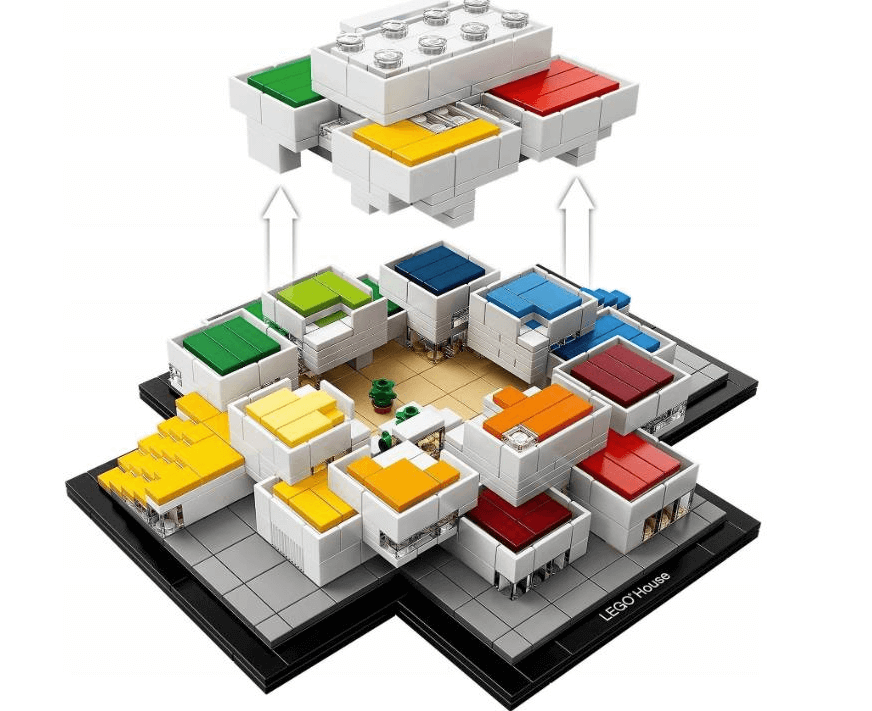
Photo Credit: BrickSatis

Please join us on the evening of November 11th for the third and final installment of the Modular Design Series. At the heart of this series is an acknowledgment of one of the greatest barriers to the expanded, effective use of offsite construction: education. Many of today’s AEC professionals were never exposed to the principles of modular construction in their formal training. For a large portion of the industry, modular remains a new and unfamiliar practice. That is why it is imperative for those with hands-on experience to share their knowledge, so that peers across disciplines can learn from both successes and setbacks.

This final session expands the conversation to include prefabricated building components as an alternative lens for understanding modular thinking. By examining how prefabrication can integrate into both traditional and hybrid workflows, attendees will gain fresh perspectives on how to apply modular principles in flexible and scalable ways.

 By convening experienced practitioners and eager learners in the same room, AIA San Francisco's Housing Knowledge Community aims to accelerate the adoption of proven modular techniques, foster innovation, and build a stronger, more collaborative design and construction community.


5:30-6:00 
Check In/Opening Reception 

6:00-7:30 Introduction and Discussion

7:30-7:45 Audience Q+A

7:45-8:30 Networking Social  

Armelle Coutant
Kit Switch, Co-Founder & CEO
Armelle Coutant is the Co-Founder of Kit Switch, a kit-of-parts interiors company advancing prefabrication as a tool for building retrofits and reuse. Her work centers on designing ready-to-install interior systems that simplify construction workflows, reduce waste, and accelerate project timelines; often transforming spaces in hours instead of weeks. With a background in architecture, sustainability, and housing innovation, Armelle brings hands-on experience navigating the complexities of industrialized construction implementation across stakeholders and project stages. She is passionate about bridging knowledge gaps in the AEC industry and creating scalable, ecosystem-driven solutions that support climate resilience and housing equity.
 
Bryan Campbell
Clark Pacific, Senior Preconstruction Manager
Bryan has over 16 years of experience within the architectural precast concrete industry, cultivating a diverse skillset through various roles.
He began his career as an Assistant Purchasing Manager, demonstrating a strong foundation in procurement. Bryan then transitioned into production, holding positions in both Production Scheduling and Estimating. This progression provided him with a comprehensive understanding of precast concrete processes, from material acquisition to project costing.
Leveraging this well-rounded background, Bryan excelled in project management, overseeing projects from initial estimates to successful completion. His leadership and organizational skills were further honed as he led the Project Management department.
Currently, Bryan applies his expertise as a Senior Preconstruction Manager at Clark Pacific, with a focus on facades and parking. He currently serves as the PCI West chapter board representative and is active at the PCI National level serving on a variety of committees including Glass Fiber Reinforced Concrete (GFRC), Architectural Precast Concrete (APC), and Sustainability.
Paul McGrath
MEYERS+ ENGINEERS, Principal
Paul McGrath PE is a Mechanical Engineer and Principal at MEYERS+ ENGINEERS with 25 years’ experience designing  multifamily and student housing, with over 50 projects delivering thousands of residential units from supportive housing to market rate apartments and condos.  These projects have been delivered via traditional fully site-built to factory volumetric modular.  With the increasing cost of construction, Paul places a focus on unitary and kit of parts systems as key strategy to make projects pencil and help address the housing crisis.
Personal LinkedIn URL:  www.linkedin.com/in/paulmcgrathpe
 
Patrick Kennedy
Panoramic Interests, Owner
Patrick Kennedy is the owner of Panoramic Interests, a development firm that has been building housing, live-work space, and commercial property in the Bay Area since 1990. The firm has focused on dense, mixed-use, mixed-income, infill developments, typically financed with private funds. All of the multi-family housing projects include below market rate units.
The firm’s projects incorporate the Smart Growth principles designed to discourage auto use, mitigate sprawl, encourage local business, and enhance the pedestrian streetscape.
Mr. Kennedy grew up in the East Bay, and attended Claremont McKenna College, majoring in Economics and English. After college, he worked as a contractor, and then attended Harvard Law School and MIT, graduating with a J.D. and a Masters in Real Estate Development. Early development work included building his own house, and renovating several small commercial properties.
He is a former member of the Carpenters Union and Steelworkers Union, and the California Bar. His hobbies include open water swimming and ultra-light backpacking, both of which have furnished surprising insights into his work in development.
 
Jen Canchola
Juno Technology, Co-Founder and COO
Jen brings over 20 years of construction and development experience spanning multifamily, hospitality, and student housing projects. Having successfully delivered $1B+ in projects nationwide, she has worked across all phases from entitlements through operational turnover. After starting in the field with national contractors, Jen moved into development and then co-founded Juno, an owner's rep firm specializing in industrialized construction strategy and execution. A master estimator, she's passionate about leveraging prefabrication and technology to help developers build more profitably and sustainably.  

  1. Explore the various forms of prefabricated building components available for use in multi-family housing projects. 
  2. Learn how to evaluate if the use of offsite building components is the right solution for your project.
  3. Participate in an interactive exercise to explore possible applications of offsite building components for multi-family housing projects.
  4. Discuss strategies for overcoming common challenges faced when incorporating offsite building components into the design process.

2 approved learning units

SPONSORSHIP OPPORTUNITIES

Support a dynamic three-part series on modular design and construction exploring affordability, design innovation, and pre-construction collaboration. Sponsor this timely program to align your brand with cutting-edge solutions shaping the future of architecture and construction.  

Options:

SERIES SUPPORTERS